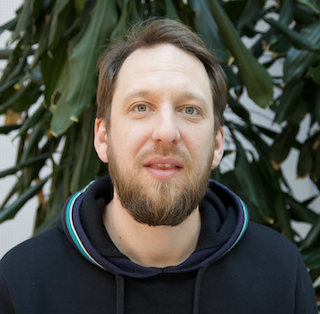
I am a Research Scientist at SINTEF in the Smart Data group. I work on scalable data systems and information integrity—building methods for processing and reasoning over extreme-scale data, and developing ways to measure, simulate, and mitigate AI-enabled manipulation in online information ecosystems. A recurring theme in my work is measurement, simulation, and stress-testing: making threats and defenses observable, comparable, and testable.
Current interests:
- Simulation and evaluation of AI-enabled disinformation and influence operations
- Scalable graph-based computation for extreme-scale data
- Data infrastructure and interoperability for marine and environmental domains
Most recently, I led an article on malicious AI swarms together with Jonas R. Kunst (University of Oslo and BI Norwegian Business School), available as a preprint here: https://arxiv.org/abs/2506.06299.
I also collaborate with Arne Jørgen Berre on a cluster of projects advancing data infrastructure and interoperability for marine and environmental domains, including Seadito, AquaInfra, and Geo4Water.
In parallel, I work with Meeyoung ("Mia") Cha and Wenchao Dong at the Max Planck Institute for Security and Privacy on simulating fully automated disinformation campaigns. This initiative is supported by Signe Riemer-Sørensen in SINTEF's Analytics and Artificial Intelligence group.
In the now-completed Graph-Massivizer project, I worked with Dumitru Roman, Alexandru Iosup, and Michael Cochez on scalable approaches to processing and reasoning about extreme data through massive graph representations, exploring how serverless computing can support efficient massive-graph programming and processing.
Previously, I served as an Associate Professor at the Oslo Metropolitan University and was part of the DD-MAC project, which studied the role of social media in conflict regions of sub-Saharan Africa. Together with Kristin Skare Orgeret, Bruce Mutsvairo, and Mirjam de Bruijn, we collected empirical evidence from Ethiopia and Mali on how digital communication shapes conflict development and mediation, including disinformation, hate speech, diaspora dynamics, and the interplay between digital and traditional media in low-connectivity regions.
During my postdoc in Simula's Department for High Performance Computing, I worked with Johannes Langguth, Xing Cai, and Fredrik Manne on computational frameworks for Graph Neural Networks, with the goal of extending deep learning capabilities to unstructured data.
Under the supervision of Professor Odej Kao at the Technical University of Berlin and Johannes Langguth at Simula Research Laboratory, in collaboration with Carsten Griwodz, Pål Halvorsen, and Michael Riegler at the Simula Metropolitan Center for Digital Engineering, I received my PhD as part of UMOD, focused on understanding and monitoring "digital wildfires"—the rapid spread of online misinformation—with the goal to identify harmful misinformation early, analyze its potential threat, and devise prevention and preparedness strategies.